
데이비드 호크니 — 빛과 시선의 자유를 그리다
David Hockney: Painting the Freedom of Light and Vision
최근 관람한 워너 브롱크호스트 전시에서 흥미로운 장면을 만났습니다.
작품 설명에는 “데이비드 호크니의 수영장 시리즈에서 영감을 받았다”는 문구가 적혀 있었죠.
그 순간, 예전 서울 라이트룸에서 보았던 호크니 전시의 장면이 자연스럽게 떠올랐습니다.
데이비드 호크니와 수영장 시리즈
데이비드 호크니(David Hockney, 1937~ )는 20세기 후반 영국을 대표하는 현대미술 작가입니다.
그의 회화는 강렬한 색채와 평면적인 구성을 통해 일상의 풍경을 새롭게 바라보는 시선으로 가득 차 있습니다.
그중에서도 ‘수영장 시리즈’는 호크니의 이름을 전 세계에 알린 대표작입니다.
1960~70년대 로스앤젤레스에서 그는 햇살이 쏟아지는 수영장 풍경을 통해 자유, 개인의 행복, 그리고 시대의 낙관을 그렸습니다.
유리 같은 물의 표면, 그림자와 빛의 리듬, 그리고 고요한 인물의 자세.
이 모든 것이 그 시대의 감정과 욕망을 상징적으로 드러냅니다.
예술의 가치, 그리고 시대의 시선
2018년, 호크니의 작품〈예술가의 초상(두 개의 수영장과 한 인물)〉은 약 9,000만 달러(한화 약 천억 원)에 낙찰되어 ‘현존 작가 최고가’ 기록을 세웠습니다.
하지만 아이러니하게도, 이 작품이 그의 ‘최고의 작품’이라고 단정되는 것은 아닙니다.
예술 작품의 가치는 단순히 기술이나 완성도로만 매겨지지 않습니다.
그보다는 당대의 관심과 감정이 어디에 머물러 있는가, 즉 시대가 공명하는 이미지가 무엇인가에 따라 결정되곤 합니다.
호크니의 수영장 연작은 바로 그 시대의 빛과 공기를 담아냈기에 ‘한 세대를 상징하는 이미지’로 남았습니다.
라이트룸에서 만난 호크니
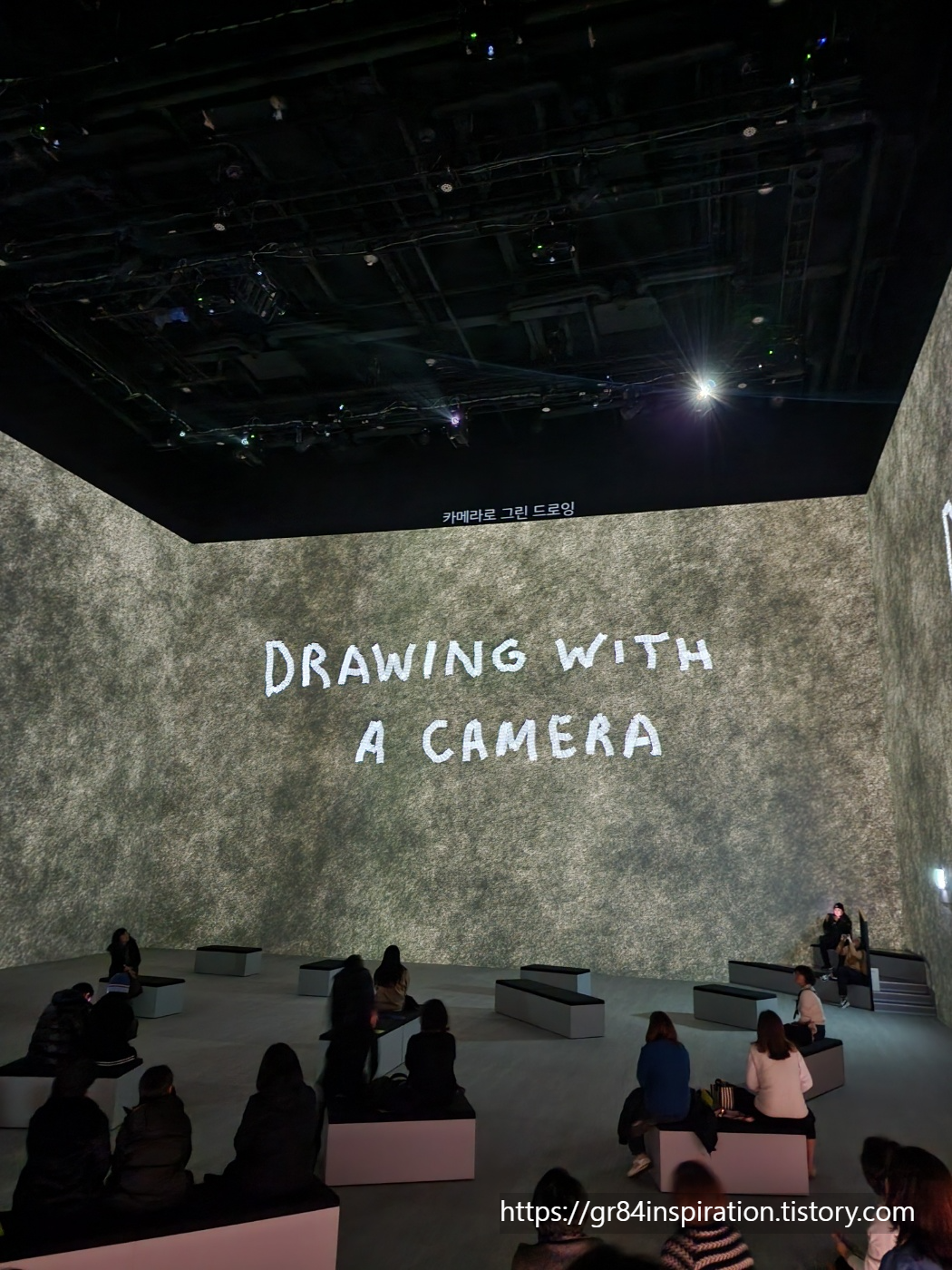
저는 몇 해 전 서울의 라이트룸(Lightroom)에서 열린
《David Hockney: Bigger & Closer (not smaller & further away)》 전시를 본 적이 있습니다.
이 전시는 네 면의 대형 스크린을 통해 호크니의 작업 세계를 영상으로 펼쳐 보였고, 마치 한 권의 시각적 자서전을 읽듯 작가의 생애와 창작 과정을 따라갈 수 있었습니다. 그가 직접 기획한 무대 이미지, 폴라로이드 사진, 그리고 LA의 자연 풍경들이 공간 전체에 생동감을 주었죠. 원화를 직접 보는 전시와는 달랐지만, ‘보는 경험의 본질이 무엇인가’를 다시 생각하게 하는 전시였습니다.
호크니가 남긴 질문
워너 브롱크호스트의 작품에서 호크니의 흔적을 발견했던 순간과,
호크니의 디지털 전시를 보았던 경험은 서로 닮아 있었습니다.
하나는 거장의 영향력을, 또 다른 하나는 예술 감상의 새로운 방식을 보여주었으니까요.
예술은 반드시 원작 앞에 서야만 감동을 주는 걸까요?
호크니는 오히려 그 반대를 보여준 사람 같습니다.
그의 작업은 늘 ‘보는 방식’을 확장했고, 디지털 전시조차도 그의 시선의 일부로 느껴졌습니다.
마무리하며
데이비드 호크니의 세계는 단순히 ‘빛나는 색채’의 이야기가 아닙니다.
그것은 세상을 보는 태도, 그리고 자유롭게 바라보는 눈의 기쁨에 관한 이야기입니다.
혹시 여러분은 호크니의 작품을 볼 때 어떤 감정을 느끼시나요?
그의 수영장 속 투명한 물결에서, 여러분은 어떤 ‘자유’를 보고 계신가요?
David Hockney — Painting the Freedom of Light and Vision
At a recent exhibition of Warner Broenckhorst,
I came across a note that read, “Inspired by David Hockney’s pool series.”
In that moment, a vivid memory returned —
the time I saw Hockney’s exhibition at the Lightroom in Seoul.
The Pool Series and a New Way of Seeing
David Hockney (born 1937) is one of Britain’s most celebrated modern artists.
His paintings are filled with vibrant color and flat, graphic compositions that invite us to see ordinary life anew.
Among them, the Pool Series became an icon that defined his artistic identity.
In Los Angeles during the 1960s and ’70s,
Hockney painted sunlit swimming pools that reflected the ideals of freedom, individuality, and optimism of that era.
The glassy surface of the water, the play of shadow and light, and the still posture of the figures—
all came together to express both the beauty and melancholy of modern life.
Beyond Value: The Eye of an Era
In 2018, Hockney’s “Portrait of an Artist (Pool with Two Figures)”
sold for around 90 million dollars, setting a record for a living artist.
But monetary value alone doesn’t define artistic greatness.
The worth of art often lies not in its perfection or technique,
but in how deeply it resonates with the emotions and gaze of its time.
Hockney’s pool paintings captured the air and light of an era—
images that still speak to the modern viewer’s longing for freedom and calm.
Encountering Hockney at the Lightroom in Seoul
A few years ago, I visited 《David Hockney: Bigger & Closer (not smaller & further away)》
at the Lightroom in Seoul.
Through four massive projection walls, the exhibition unfolded Hockney’s world like a visual autobiography.
It offered a journey through his life and creative process—
from his stage designs and Polaroid collages to the landscapes of Los Angeles that inspired him.
Though I wasn’t standing before his original canvases,
the experience made me reflect on what it truly means to see.
It was less about viewing art and more about being immersed in someone’s way of seeing.
The Question Hockney Leaves Behind
When I saw traces of Hockney in Warner Broenckhorst’s work,
I realized how naturally one artist’s vision can echo through another.
Hockney expanded the very idea of seeing,
and even a digital exhibition—one mediated by screens—felt like part of his visual philosophy.
Must we stand before an original painting to feel its emotion?
Hockney’s work seems to whisper otherwise.
He showed that the act of seeing itself can be art.
In Closing
David Hockney’s art is not only about brilliant colors or pools bathed in light.
It is about how to look at the world with freedom and joy.
When you encounter his paintings, what emotions arise for you?
In those transparent ripples, what kind of freedom do you find?
'about artist' 카테고리의 다른 글
| 인베이더 Invader (0) | 2025.10.25 |
|---|---|
| 마우리치오 카텔란 Maurizio Cattelan (0) | 2025.10.20 |
| 조나단 보로프스키 Jonathan Borofsky (0) | 2025.10.15 |
| 김환기 WhanKi Kim (0) | 2025.10.08 |
| 로버트 인디애나 Robert Indiana (0) | 2025.10.03 |